Our friends at the Trust have published their latest newsletter covering their wide scope of work and exciting projects throughout the catchment
http://us7.campaign-archive2.com/?u=d609b5fce77f392cee5505b8e&id=e007c93904&e=724fc538e8
Our friends at the Trust have published their latest newsletter covering their wide scope of work and exciting projects throughout the catchment
http://us7.campaign-archive2.com/?u=d609b5fce77f392cee5505b8e&id=e007c93904&e=724fc538e8
In my experience the most likely mammal you are likely to encounter in the river other than other anglers, are dogs! I have even been knocked of my feet by an over exuberant Labrador (thankfully towards the bank, avoiding a soaking). Around Dollar and Tillicoultry I have often come across mink scurrying about in the riverside trees and bushes, and occasionally in the river fishing. I know that there are otters on the river, I see their scat but have only caught momentary glimpses of them.
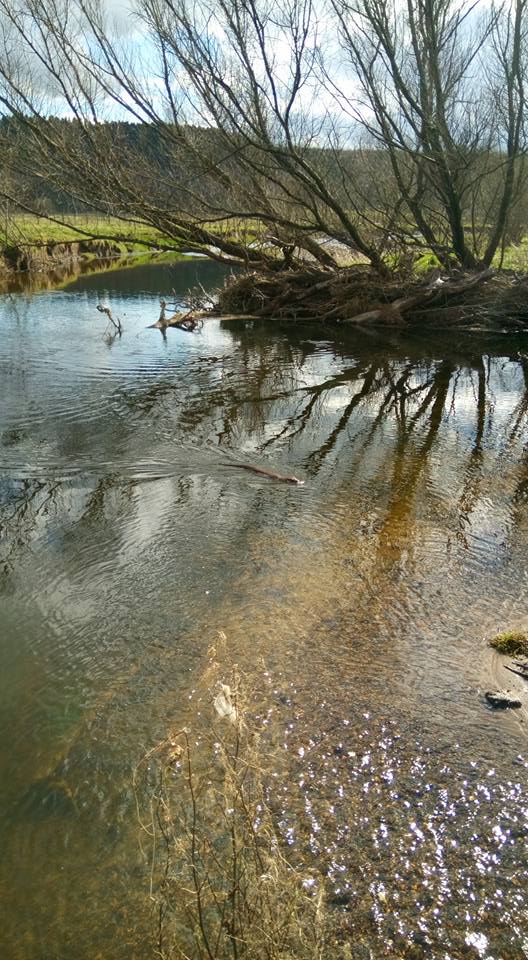
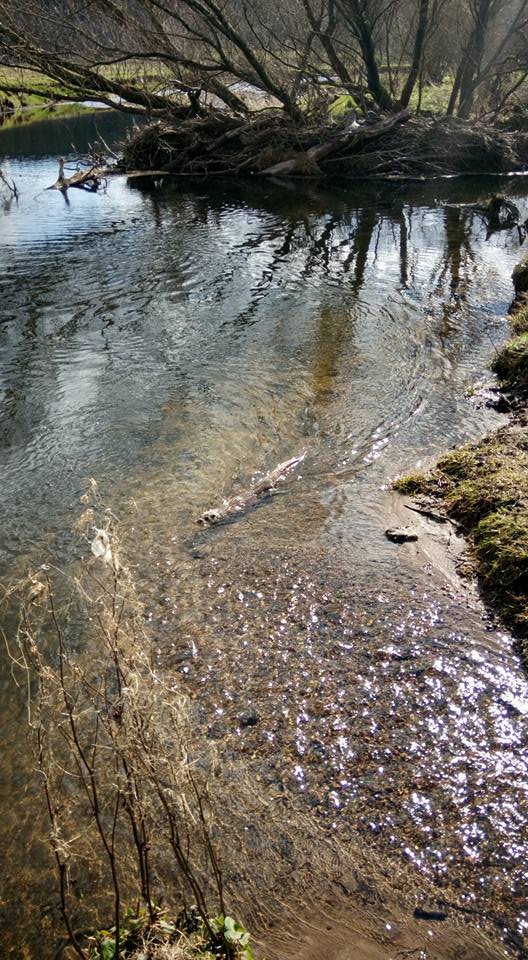
Mick Berney had much more luck this week and was able to snap this lad playing in the river:
This area has been a bit of a mink hotspot in the past. One of the good things about the otter is that they will not tolerate completion from mink and their presence will generally drive down the mink population.
Thanks to Mick for sharing the pictures
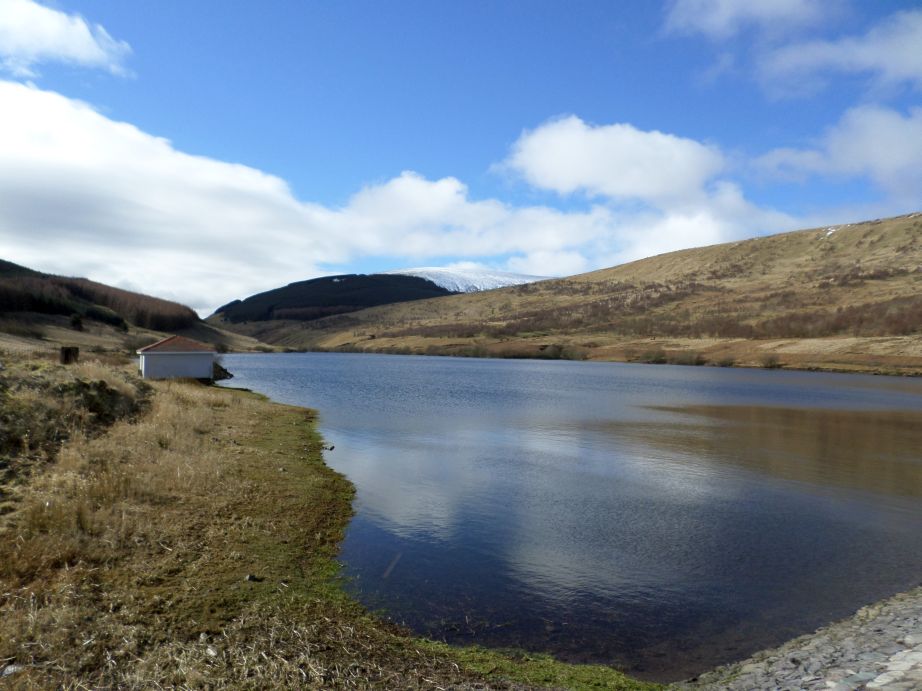
Naturally enough some of Glenquey’s most enthusiastic regulars (Ian, Alan and Donald) took advantage of the new early start of the season at Glenquey and turned out on Tuesday for the opening day of the season at the reservoir. By all accounts with the a steady east wind blowing in from a frigid North Sea conditions were a tad bit cold.
By all accounts this is the first trout of the season caught at Glenquey by Alan Graham
He ended up catching a further three trout and lost another three (using a tungsten beaded black nymph) all from the north bank!.
He wasn’t alone the other lads also manage to land fish!
A great start to the season that bodes well for the warmer months!
Well tomorrow is Tuesday 15th March and is of course the opening day of our 2016 Season 🙂
Permits have been distributed to all the usual outlets (see https://devonanglingassociation.org.uk/about-3/permits-2/ )
The day is set fair, perhaps a wee bit of haar early on, then it should be bright with a gentle east wind (though not t-shirt weather). The river looks in pretty good nick and you never know the sun might encourage a few short hatches!
In the unlikely event you catch a spring run salmon please remember all salmon must be released.
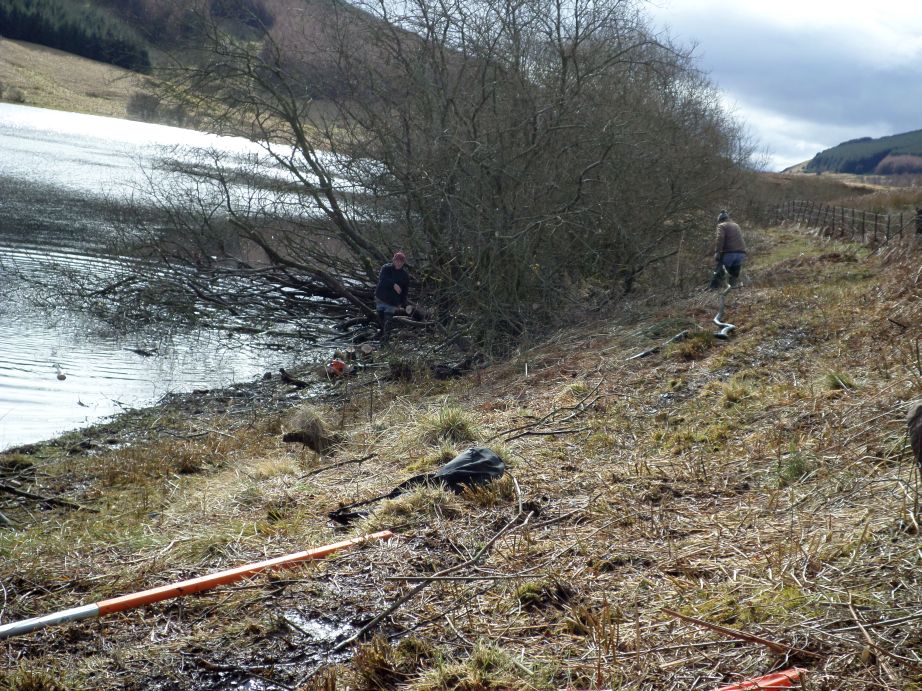
A big change this year will be that Glenquey opens for 2016 on the same day as the river. Work parties have been busy clearing shrubs and trees along the north bank opening up more areas to cast when the reservoir is full
If you are spending time on this bank during the season, you can help the work parties while waiting for a rise by bringing along a handsaw!
I am pleased to report that work parties spied a few fish rising out in middle of reservoir last Wednesday.
If you have success on the river or at Glenquey, then feel free to send us your photos/tales and we will post them here.
Best of luck for the 2016 Season 🙂
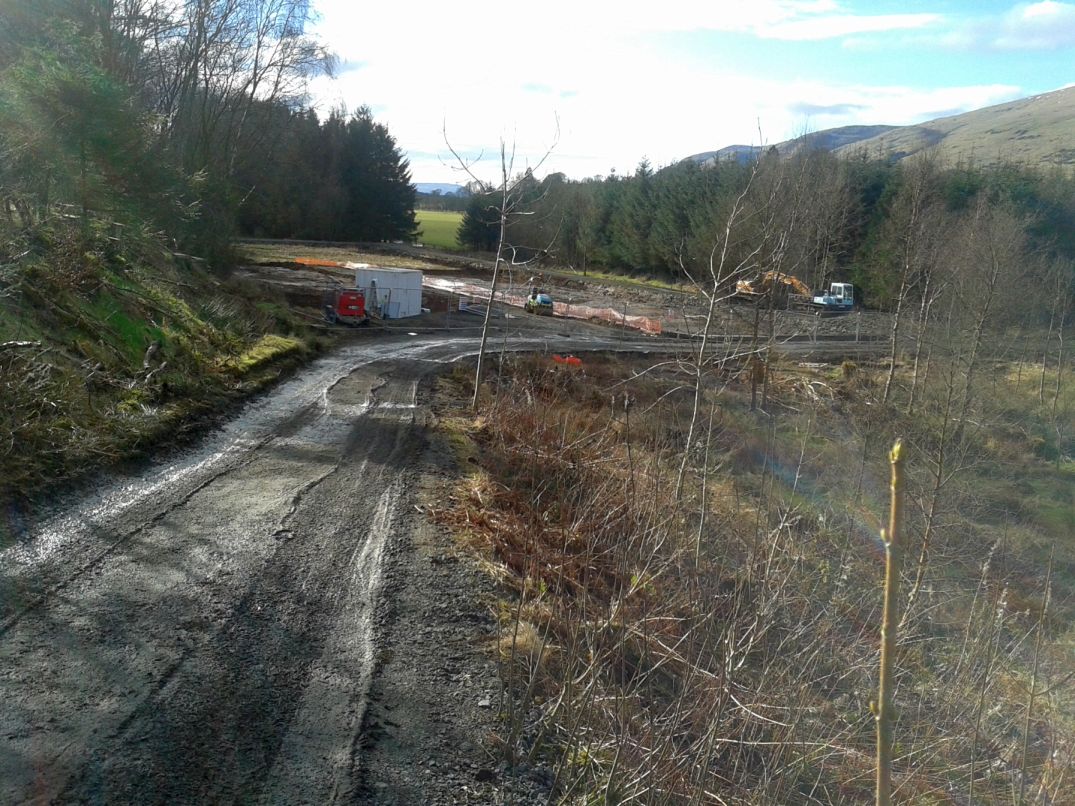
Anyone travelling along the Dollar-Muckhart road or on the back road from Vicars Bridge to Blairigone will have noticed the large scale excavations underway by the track that runs down to the river by Mains of Blairingone
These works are being undertaken by contractors employed by the Coal Authority and are very much for the benefit and protection of the river. The Devon Angling Association are delighted that these works are being undertaken now, having made a number of representations to the Coal Authority over the years.
So what’s going on?
Well the area between the plantation and valley side has for about the last twenty years has been a passive water treatment facility, helping to clean iron contaminated water from old mine-workings before it reached the Devon. It was installed following a serious outbreak of minewater from an old adit in the vicinity of Mains of Blairingone in 1994 which had resulted in serious pollution in the Devon. Anglers alerted the Forth River Purification Board when up to 2km of the Devon downstream became coated in Ochre (the characteristic orange gunge). The small burn it discharged into was rendered devoid of all life over 800m. What had caused this rapid deterioration could never be established but the finger was pointed at British Coal who at the time were working the Lambhill Opencast Coal Site at Blairingone. As was their policy at the time they denied liability for pollution but worked with the Forth River Purification Board to deal with the problem.
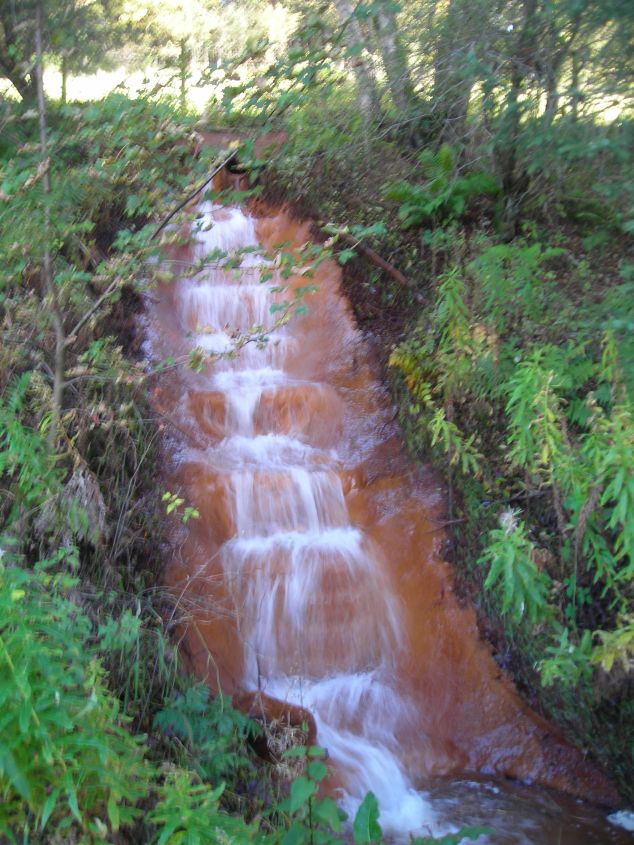
The solution was to capture and pipe the minewater under the Blairingone road were it is allowed to flow down a purpose built cascade, before flowing into the shallow lagoons which were allowed to be populated with reeds, rushes and other wetland plants
I will save you a chemistry lesson, but essentially the problem with the minewater begins with Fools Gold (Iron Pyrites) which is commonly found in coal, ironstone and shales. It oxidises in contact with air, and as it does it produces heat which accelerates the oxidation (which in certain circumstances can lead to spontaneous combustion in coal, which resulted in some tragic accidents in collieries). In oxidising the Iron Pyrites is converted to Iron (Fe2) Sulphate which is solvent in water. When the mines are abandoned and the water table rebounds to its natural level, that water dissolves the Iron Sulphide in the first instance Iron (Fe2) Sulphate and then Iron (Fe3) Sulphate. When the soluble iron remerges and comes into contact with oxygen again, it rapidly oxides forming Iron Hydroxide which is the orange gunk known as Ochre.
The cascades are designed to oxidise the soluble iron, which is then carried by the stream and fed into the “reed beds” which filter the water to collect all the iron before the clean water is discharged into the Devon. The system has been very successful in cleaning the water and returning this section of the Devon into a very healthy stream.
We were becoming concerned that the effectiveness of the reed beds was diminishing as the lagoons filled with sediment and that the bunds were not as substantial as they may have been. It is therefore really pleasing that the Coal Authority are taking a ‘belt and braces’ approach to renovating the treatment system.
Members and visitors are urged to visit and contribute to the latest consultation of the Wild Fisheries Review:
https://consult.scotland.gov.uk/wild-fisheries-reform-team/draft-wild-fisheries-strategy
The document takes some reading but the proposed regulations will probably result in fundamental changes to angling in Scotland.
The associated consultation provides you with an opportunity to influence these changes:
The new season is now only 24 days away and I am sure we are looking forward to fishing our favourite pools, hot spots at Glenquey Reservoir and exploring the subtle changes in the river caused by this winter’s many spates!
There are a few important changes that members and visitors need to be aware of for the 2016 season.
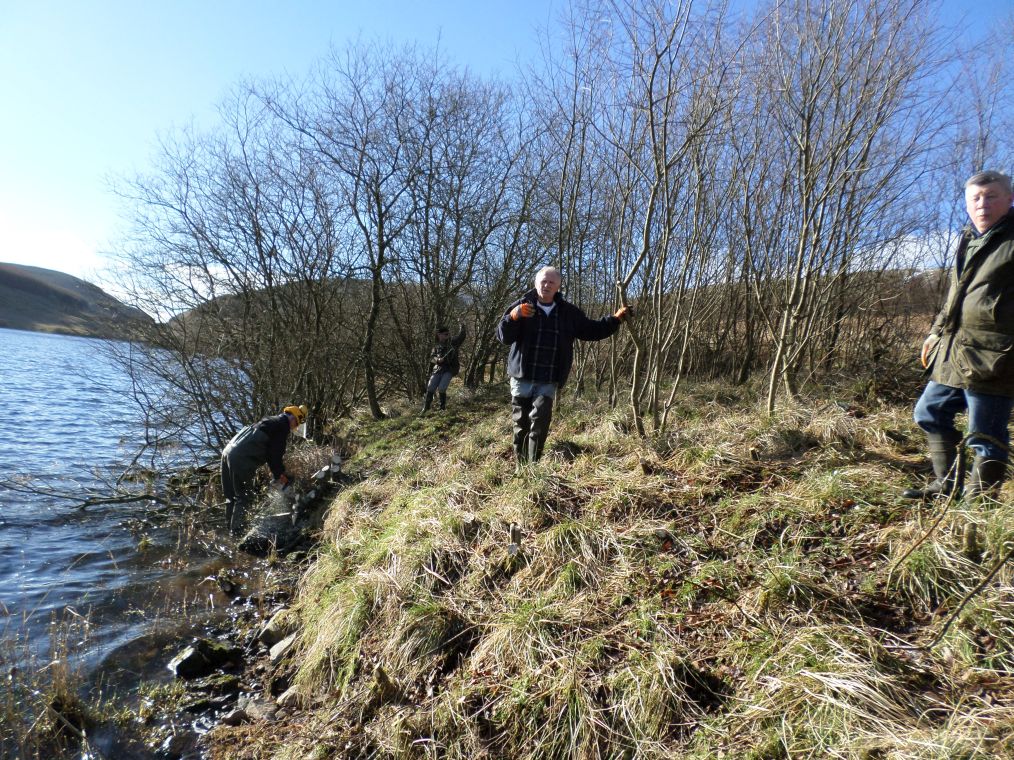
Meantime the work parties have continued the hard graft of clearing the north bank of Glenquey Reservoir:
……. 48 days to the start of the new season!
At times in the last week it has almost felt like April (though to be fair it has on some days felt like January too, all on the same day).
The regular bouts of heavy rain have unleashed a series of significant spates (the likes of which the Salmon anglers were dreaming of in September and October) last week continuing the pattern of the winter.
Time will tell what impact these spates have on the both the Salmon and Trout spawning success?
The one positive is that groundwater in the Ochils is being recharged and the reservoirs mostly recharged, which hopefully will give us another great start to the trout season. The saturation of the ground can be evidenced by the Devon’s current response to rainfall events in the upper catchment compared to lower end of the river.
Impact of rain 26/01/16 at downstream of Castlehill Reservoir:
when compared to the SEPA gauge in Glenochil over the same period (note how the Devon rises a metre in just over 3 hours at Castlhill, but how much smother the rise is away downstream at Glenochil)
That all said there clear signs of Spring on the river bank such as these Snowdrops photographed by Alan Graham earlier in the week!
Mean time the boys from the work party have been back up Glenquey, bushwhacking along the north bank opening up more opportunities for access to that side of the reservoir. By the time they reached there, Spring had disappeared and Winter had returned with a new dusting of snow
Not long now 🙂
A bit of cold and snow does not put of the regulars of the DAA work party getting on with preparing the river for the new season
For the last two Wednesday the guys have been clearing the winter’s spate debris from the river around Marchglen. This often unheralded work helps keep the banks accessible to anglers and the burns accessible to spawning Salmon and Trout.
If you have time on Wednesdays to help out, please do not hesitate to get in touch via the website or the Secretary.
The Annual General Meeting of the Devon Angling Association was held at the Royal Arms, Tillicoultry on Tuesday 12th January 2016.
20 Members attended and contributed to a lively interesting meeting.
David Mudie, the association’s Honorary Secretary reported to the meeting on the activities of and issues effecting the Association during the 2015:
Officers of the association were appointed for 2016 and the committee appointed (I will explain how the DAA operates in a post before the start of the season)
The meeting was then opened to the floor.